


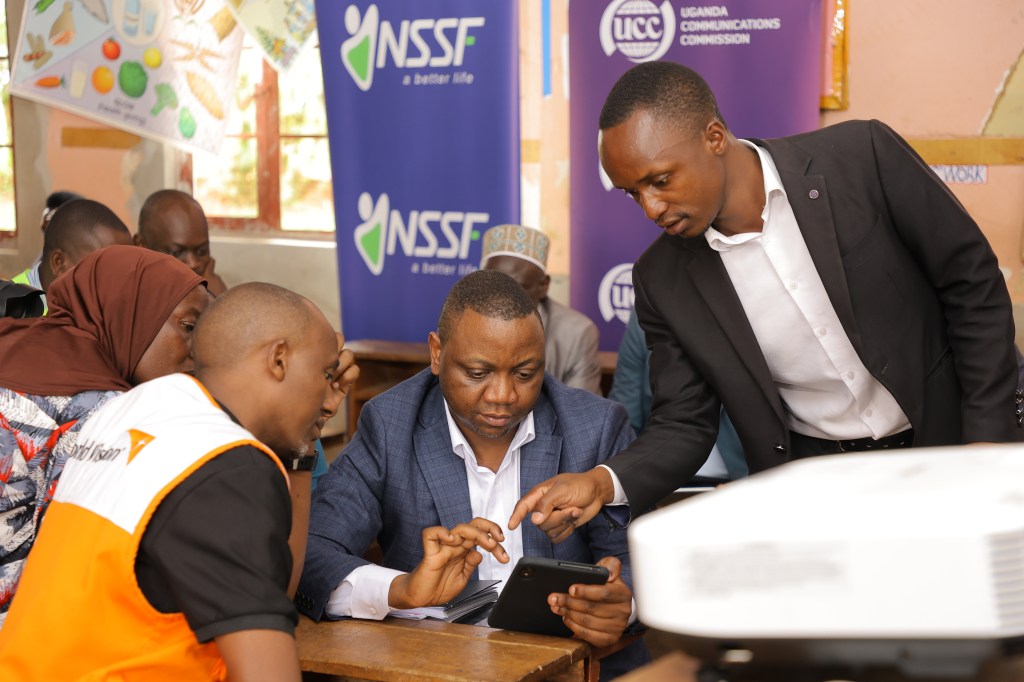
MPIGI, Uganda – September 23, 2025 – Signalling a new chapter in the quest for digital inclusion, the Uganda Communications Commission, through its Uganda Communications Universal Service and Access Fund (UCUSAF), officially launched the E-Classroom project at St. Kizito Primary School in Mpigi District.

The pilot project aims to equip underserved primary schools with modern ICT tools, bridging the digital divide between rural and urban schools and empowering learners with the skills needed to thrive in today’s digital world.
Over the years, UCC has worked closely with the Ministry of Education and Sports to integrate ICTs into Uganda’s education system, equipping 1,300 government-aided secondary schools with ICT laboratories. Besides, over 50,000 teachers have been trained in essential ICT skills, enabling them to deliver digital learning effectively.

Building on this foundation, the E-Classroom project expands UCUSAF’s ICT in Education program to primary education, aligning with the Digital Transformation Roadmap (2023/24–2027/28) and the Digital Uganda Vision 2040.
“This initiative will enhance literacy and numeracy, improve performance in national examinations, and expand access to quality learning materials through digital devices,” said Eng. Arnold Mujuni, representing UCC’s Executive Director, Hon. Nyombi Thembo.

Recognizing that partnerships are key to meaningful progress, UCC joined hands with World Vision Uganda and National Social Security Fund (NSSF) to bring this vision to life.
UCC, through UCUSAF, supplied ICT equipment to all 13 pilot schools. World Vision Uganda identified suitable schools in districts where it has ongoing education programs. NSSF joined as a forward-looking partner, supporting the rollout of modern learning infrastructure.
Currently, the project is ongoing in 13 primary schools across Buikwe, Mpigi, and Nakasongola districts, creating a strong foundation for future expansion.
“Alone we can do so little; together we can do so much,”
Eng. Mujuni emphasized, quoting Helen Keller to highlight the power of collaboration.
While Uganda has over 12,000 government-aided primary schools, this project represents the first step in a long journey. UCC calls on stakeholders within and beyond the education sector to join hands in expanding the reach of digital learning.
“Individually we are a drop; together we are an ocean,”
said Eng. Mujuni, urging development partners to support scaling the initiative.

As the E-Classroom project takes off, the dream of a digitally empowered Uganda moves closer to reality. By equipping young learners from underserved areas with essential digital skills, this initiative is not only transforming classrooms but also shaping the future of Uganda’s workforce and society.
The launch brought together government officials, development partners, district leaders, and educators, all united by a shared vision of leveraging technology to create equitable access to quality education.

The Uganda Communications Universal Service and Access Fund (UCUSAF), established under the Uganda Communications Act, 2013, is dedicated to promoting modern communications and ICT development across the country. Through its multiple initiatives, UCUSAF works to ensure that no Ugandan is left behind.






 THE COMMUNICATIONS BLOG
Leave a comment