

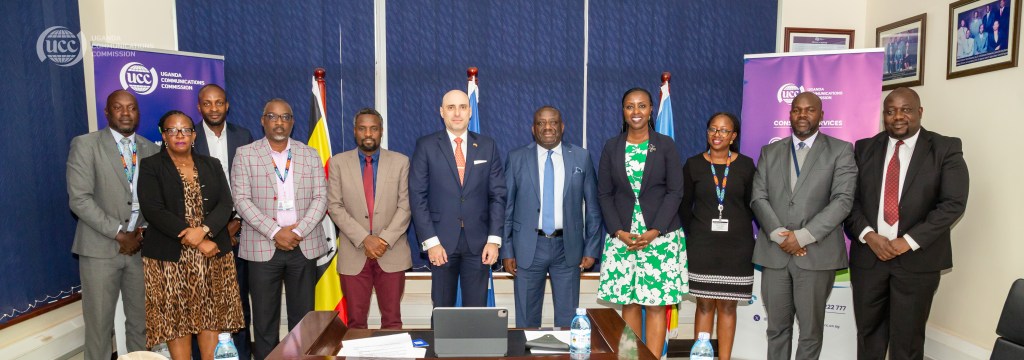
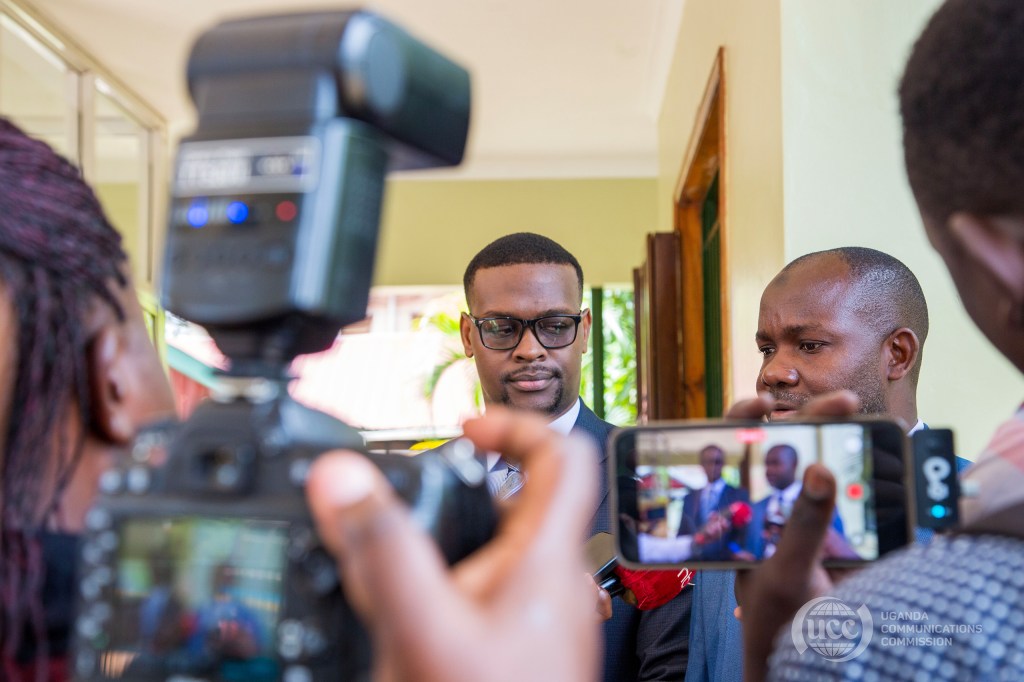
KAMPALA, Uganda – the Uganda Communications Commission hosted a delegation from the US Embassy in Kampala, led by Mr. Luis Salas, Economic Unit Chief at the US Embassy. The meeting focused on enhancing bilateral cooperation in the evolving ICT sector, emphasizing key issues such as licensing frameworks, cybersecurity, AI regulation, and infrastructure development.

Strengthening Partnerships in the ICT Ecosystem
Mr. Salas acknowledged Uganda’s growing relevance in the digital landscape and emphasized the Embassy’s interest in understanding regulatory processes. “We’re here to build relationships and understand how the U.S. government and American tech companies can engage constructively within Uganda’s regulatory framework,” he noted.
UCC welcomed the collaboration, affirming its commitment to transparency, innovation, and inclusive access. The Commission highlighted its online licensing system, streamlined regulatory procedures, and emphasis on creating a conducive environment for both local and international telecom players.
Navigating Starlink’s Entry into Uganda
One of the central topics was the entry of Starlink, a satellite internet provider into the Ugandan market. UCC clarified the licensing requirements, noting that Starlink’s operations qualify it as a National Telecommunications Operator (NTO), which carries certain obligations, including local presence and infrastructure deployment.
UCC emphasized its openness to innovation but insisted on consistency in regulatory classification. “Starlink’s service delivery combining infrastructure and end-user service aligns with our NTO license category. The licensing fees are consistent with those applied to other major players like MTN and Airtel,” a UCC Director explained.
Cybersecurity, AI, and the Push for Trusted Infrastructure
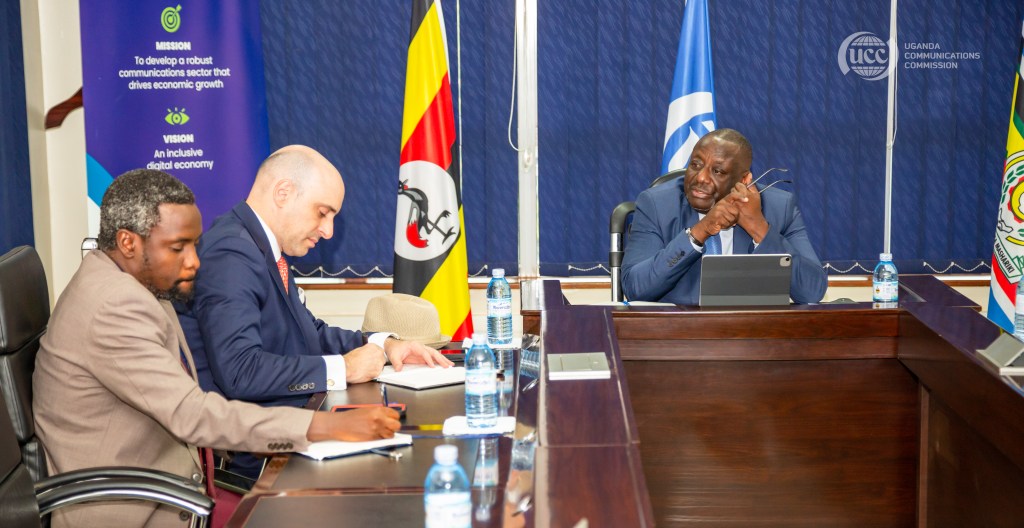
Cybersecurity emerged as a shared priority. The delegation from the US Embassy raised the importance of using trusted vendors in ICT infrastructure, particularly considering the rising global concerns about data integrity and national security. UCC acknowledged the need for stringent due diligence processes and revealed ongoing efforts to embed data security considerations into equipment approval standards.
The discussion also delved into artificial intelligence, where UCC disclosed that a national task force is currently evaluating global benchmarks to inform Uganda’s AI strategy. “We’re approaching this holistically looking at sector-specific use cases while promoting innovation,” said a representative from the UCC AI task force.

Open RAN and 5G Rollout Challenges
The conversation shifted to Open RAN technology, a US backed initiative aimed at enhancing network interoperability and reducing dependency on single-vendor ecosystems. While UCC expressed interest, officials acknowledged challenges around backward compatibility with existing 3G infrastructure and high maintenance costs.
The two parties agreed on the need for expert exchange, with the US delegation offering technical assistance and training to support Uganda’s transition to modern, secure telecom infrastructure.
Bridging the Connectivity Divide
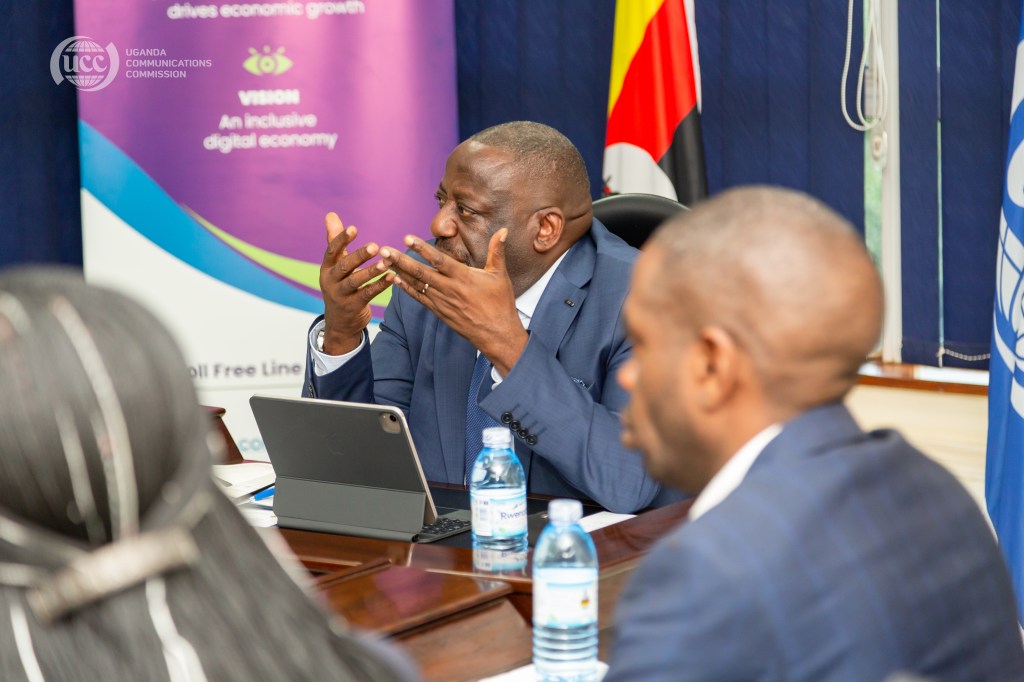
Rural connectivity remains a national challenge. UCC representatives highlighted that over 30% of Uganda remains unserved by telecom services. The discussion explored how mechanisms such as the US International Development Finance Corporation (DFC) and partnerships with allies like Korea and Japan could support investment in hard-to-reach areas.
In the same vein, Starlink’s potential to quickly provide countrywide internet access through its satellite model was noted—pending regulatory compliance and local collaboration.
Capacity Building and Cultural Diplomacy
The meeting also touched on capacity building and cultural exchange. UCC expressed interest in establishing academic partnerships with US institutions and tapping into programs such as the International Visitor Leadership Program (IVLP) to empower mid-career professionals. The US team affirmed their support, with proposals to include Ugandan stakeholders in future expert exchanges, especially in cybersecurity, AI and internet governance.
A Shared Path Forward
The dialogue concluded with both parties committing to continuous collaboration, grounded in transparency, shared values, and mutual respect. The US Embassy reaffirmed its readiness to facilitate engagements, technical support, and investment discussions, while UCC welcomed the opportunity to co-create a secure, inclusive, and innovation-driven communications sector.


 THE COMMUNICATIONS BLOG
Leave a comment