


It is double joy every 9th of October as Uganda celebrates not only her independence anniversary, but also joins the rest of the world to mark World Post Day. The latter was created to commemorate the anniversary of the Universal Postal Union (UPU), which was established in 1874. As such, this year the global postal community celebrates 150 years of enabling communication and empowering peoples across nations.
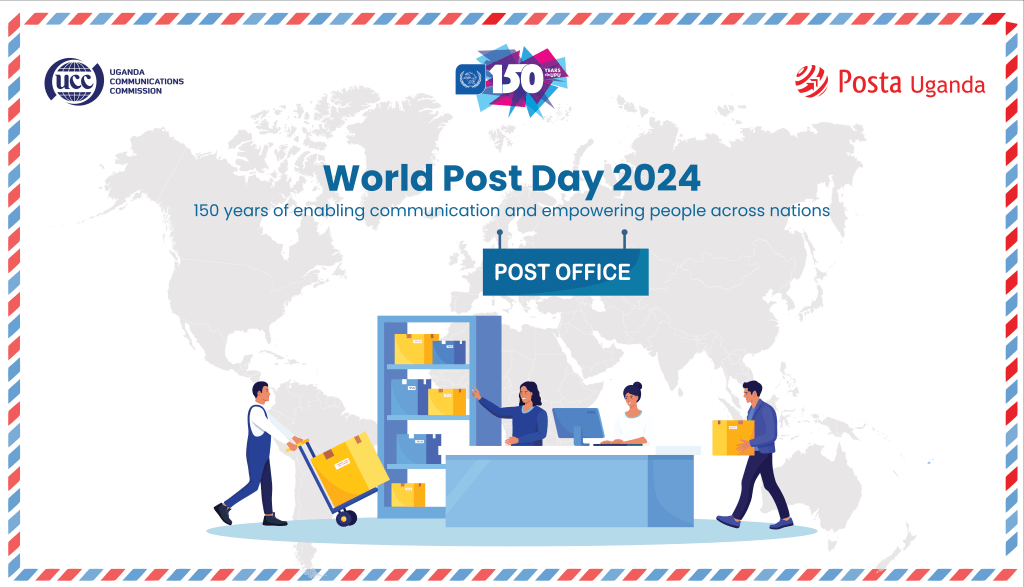
The rationale of World Post Day is to bring awareness to the Post’s role in the everyday lives of people and businesses, as well as its contribution to global social and economic development.
In a statement to mark this year’s iconic anniversary, the UPU Director General, Mr Masahiko Metoki, said:
“Today, the UPU leads efforts to modernize and improve postal services. It provides a space for countries to share knowledge, find new solutions, and address modern challenges. The UPU’s spirit of cooperation helps turn obstacles into opportunities, making sure postal services evolve with the changing world.
“Where once we viewed the rise of digital communication and the decline in traditional mail volumes as a threat, we now see a wealth of possibilities. The UPU’s extensive network has adapted to support a broader range of services – including e-commerce, financial, social and digital services – ensuring inclusive access for people worldwide, including in the most remote areas in order to leave no-one behind.
“Instead of viewing competition as a challenge, the UPU welcomes partnerships with a wide range of stakeholders. This inclusive approach strengthens our ability to address global challenges, like climate change, which requires cooperation across borders.”
In Uganda, postal services are regulated by Uganda Communications Commission (UCC), and the scope of oversight includes licensing and enforcement of standards.
UCC in partnership with other stakeholders, including Uganda Post Limited, has organised this year’s World Post Day activities in Gulu. The activities rotate around stakeholder engagement to empower consumers with information about the relevance and efficacy of postal and courier services in a digitally driven communication ecosystem. In addition to mobilisation activities, radio talk-shows and real time consumer complaint handling, a blood donation drive has been organised from 7th – 10th October 2024 at the Post Office premises in Gulu.
Postal/courier categories
Uganda Communications Commission has licensed over 30 service providers (operators) that offer a wide range of postal and courier services under various categories as listed below:
- Reserved National Postal Operator: Uganda Post Limited, trading as Posta Uganda, is the designated national postal operator and, therefore, the national postal licensee. It is charged with the responsibility of ensuring provision of universal postal services as an obligation (USO) and has the widest international and domestic coverage.
- International Operator: Operates internationally with both worldwide and domestic networks.
- Regional Operator: Operates in the East African region.
- Domestic (national) Operator: Operates within the whole of Uganda.
- Domestic (city to city) Operator: Operates from one city to another, for example Kampala to Gulu. This category is best suited for bus transport operators.
Benefits of being licenced
- Licensed operators easily compete for postal and courier service contracts both within the public and private sectors.
- Through a framework for the sharing of infrastructure, licensed operators generate and share revenue through interconnection of delivery systems with the assistance of UCC. For example, an operator plying the Kampala – Arua route can accept an item going to Mbale through an agreement with an operator on the Kampala – Mbale route and vice versa.
- The courier business provides an opportunity for last mile delivery of e-commerce (online) transaction goods. Licensed operators are in position to rebrand and reposition themselves as last mile delivery vehicles.
- Licensed operators can increase their revenue and profitability from postal services by leveraging on the passenger services.
Regulatory benefits – operator and consumer protection
- Through promotion of fair competition among operators, UCC seeks to protect licensed operators from uncompetitive practices. Reported cases are investigated and remedies sought for aggrieved licensed operators. Fair competition protects consumers from exploitation and operators from unfair business practices, thereby ensuring sustainability in the sector.
- Licensed operators benefit from coordination initiatives between the postal industry and relevant national and international organisations in matters relating to postal services. For example, coordination with the anti-narcotics and counter-terrorism units of the Uganda Police can promote security and safety within the postal supply chain.
- Licensed operators provide postal and courier services in conformation with national and international standards. UCC has developed standards and measures to protect the interests of both consumers and licensed operators. Adherence to local and international standards makes it easier to enhance the postal services footprint both at home and across borders.
- Licensed operators benefit from UCC-led initiatives that seek to promote efficient, equitable and quality postal services. Such initiatives include capacity building and sensitisation programmes.
Risks of not being licenced
Loss of brand reputation and market positioning. In the absence of a licence granted by UCC in line with Section 33 (1) of the Uganda Communications Act 2013, any postal and courier services offered are illegal and will negatively impact on the reputation of the culprit(s).
Safety of life and property. Unlicensed operators may not conform to national standards and procedures of handling unaccompanied luggage, leading to increased exposure to dangerous and illicit substances in transit.
Revenue loss. Unlicensed postal service operators are likely to lose revenue as sensitised customers opt for licensed service providers.
Penalty. A person who operates postal and courier services without a licence commits an offence and is liable to suffer legal repercussions in accordance with relevant laws and regulations.
Benefits of dealing with licensed operators
One of the key reasons for licensing and regulating postal and courier services is to ensure high standards in the provision of the said services. Using the services of licensed operators to convey and deliver letters, packets, documents, packages, parcels, and other postal articles ensures secure, quality, and reliable services, as well as recourse to recognised consumer complaint mechanisms.
- Licensed operators are reliable and accountable because they are required by UCC to adhere to standards of service, operational integrity and obligations. In case of issues such as delays, lost parcels, or damage, the couriers are accountable and obliged to offer recourse.
- Licensed couriers have security systems in place, ensuring that the packages in their care reach the destinations securely. This reduces the risk of theft, tampering, or loss.
- Most licensed courier services provide real-time tracking, allowing senders and recipients to monitor the progress of their deliveries. This transparency ensures that both parties are kept up to date, reducing anxiety and improving trust in the service.
- Licensed operators depending on their license category have extensive networks, both locally and internationally, offering greater flexibility and convenience.
- Most licensed courier operators provide insurance options, safeguarding your shipment in case of damage, loss, or other unforeseen events. This can be particularly important for valuable or fragile items.
- Licensed operators offer structured customer service to handle queries, complaints, and delivery issues. They are often equipped to offer 24/7 support, ensuring that concerns are addressed promptly.
- For both individual and business clients, licensed courier operators typically offer an electronic system for shipment booking, invoicing, and proof of delivery, making record-keeping easy and organized.
Postal and courier service standards
UCC has developed minimum standards of service expected from all licensed postal and courier operators. These will be reviewed from time to time as provided for under the UCC Quality of Service Regulations of 2019.
Customer complaints





 THE COMMUNICATIONS BLOG
Leave a comment