


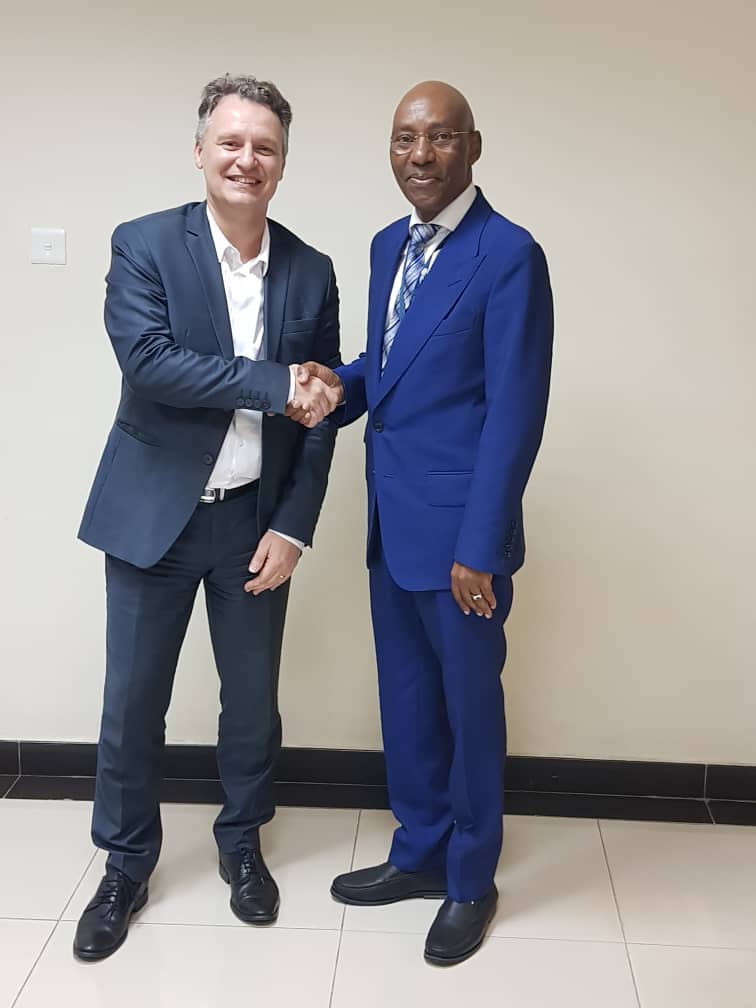
The MTN Uganda CEO Mr Wim Vanhellpute made a courtesy call at the Uganda Communications Commission (the Commission) upon returning to the country. MTN Uganda shares the country’s dramatic Mobile telephony transformation which started round about 1996, as part of the ICT policy reform process when the government liberalised the telecommunication sector and opened it for competition by licensing multiple players. The year before, in 1995, only 0.4% of households in Uganda had a telephone line.
There were only one telephony operator and about 46,207 fixed lines. Of these, about 36,472 were in Kampala. That year, Uganda got its first mobile telephony operator, Celtel. It had about 3,500 subscribers. There was no internet, no FM radio, and TV reach was only in Kampala and nearby districts and not digital.
In 1997, the Commission was established by an Act of parliament. This marked the start of the ICT revolution in Uganda. On October 21, 1998, MTN Uganda launched its services. At the time, there were 12,000 mobile phone subscribers. That figure had grown to 40,000 by the end of the year. There were 490,000 subscribers in 2002 and 4.6 million five years later in 2007. By December 2018, the number of telephone subscriptions stood at 24 million subscribers by December 2018.
The communications ecosystem now has several cellular and mobile telephone networks, courier services, private radio and television stations, multi-purpose community telecentres providing communication services telephone, e-mail and Internet, multimedia services, computer services to name a few.
Currently, Telecommunications service providers include MTN, Airtel, UTL, Africell, Smile Communications and K2. Telecommunications firms have introduced a variety of new products such as 3G and 4G mobile broadband services, mobile money transfers, and several value-added services.
Mobile telephony has revolutionised the livelihood of ordinary people; it has cut costs of public communications and enabled an unprecedented array of e-services and applications in furthering the development of a robust communications sector in Uganda.

 THE COMMUNICATIONS BLOG
Leave a comment